How to Get So Good at Valorant It Feels Like Smurfing
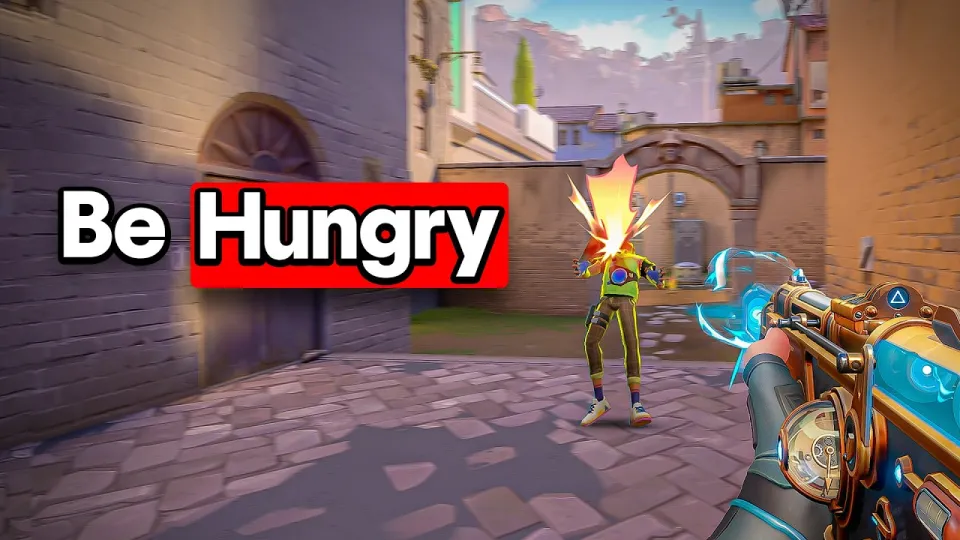
Video: How to Get So Good at Valorant it Feels Like Smurfing
Want articles like this for your own video to promote it on YouTube and Google? Order them through the Telegram bot @sat_sit_bot. It writes articles around your video, embeds the video and publishes them on popular niche websites (no ads). Your first 50 articles are free.
Key takeaways
- Smurfing is not a hack or a second account — it is the gap between reacting to what the enemy actually does and guessing what they might do.
- The core loop: hold an angle, react to the peek, adjust your crosshair, take the shot, then move somewhere the enemy is not expecting.
- Reaction speed beats prediction: most players die because they pre-aim a guess, not because their aim is slow.
- Movement is the cheapest skill to fix — counter-strafe, stop, shoot, and never fire while your velocity is non-zero.
- Konpeki's Immortal Roadmap Program promises 5 divisions in 10 weeks with limited weekly slots via a free call.
Getting so good at Valorant that you look like a smurf comes down to one habit: react to what the enemy actually does instead of predicting what you think they will do. Smurf-level play is not superhuman aim, it is a repeatable loop — hold an angle, react to the peek, adjust, shoot, reposition — executed so consistently that lower-ranked opponents read it as cheating. Konpeki breaks this down in the video How to Get So Good at Valorant it Feels Like Smurfing, and the same logic works whether you are Bronze or Ascendant. If you want a structured path instead of guesswork, you can apply for the Immortal Roadmap Program, which targets five divisions of climb in ten weeks.
What smurfing actually looks like from the inside
Smurfing looks like mind-reading from the outside, but from the smurf's chair it is mostly information management. A high-ranked player on a low account is not hitting impossible flicks — they are taking fights where the odds are already stacked in their favor, and refusing the ones where they are not. That means three things happen constantly:
- They clear angles in an order that protects them from the most likely threat first.
- They peek with intent, not out of boredom, and they leave before the trade arrives.
- They use utility to remove the enemy's options instead of to look flashy.
The gap between a Gold player and a Radiant player is rarely raw mouse control. It is the number of unnecessary risks taken per round. Cut that number and your win rate climbs before your aim does.
The reaction-first rule that replaces prediction
Most players lose duels because they are already committed to a guess before the enemy appears. You pre-aim a corner, the enemy wide-swings from a different spot, and your crosshair is 40 degrees away from the threat. Fixing this is the single fastest way to feel like a smurf in Valorant.
The rule is simple: place your crosshair where the enemy must appear, then let your eyes do the work. Hold a tight angle, keep the crosshair at head height, and wait. When the enemy peeks, you react — you do not guess. This is why so many players report that slowing down made them faster: fewer wrong guesses means fewer deaths that were never about aim.
Building a movement baseline you can trust
Movement is the cheapest skill to fix and the one most players ignore. If you are moving when you shoot, your bullets go somewhere you did not aim, and no amount of crosshair placement saves you. The baseline drill is counter-strafing: tap the opposite movement key to kill your velocity, then fire.
A practical way to train this without guessing whether you stopped in time:
- Enable the movement error multiplier in the shooting range settings and set it to roughly 0.5 so the visual feedback is easier to read.
- Strafe left and right with A and D, firing one shot each time your direction changes.
- Watch the error indicator — if it lights up, you fired while still sliding, and that shot would have missed.
- Gradually remove the multiplier once stopping becomes automatic.
This is the drill behind the question every new player asks: do you release the keys, or keep moving while firing? The answer is that you stop, shoot, and move again — the shot always happens at zero velocity.
Crosshair placement and angle discipline
Crosshair placement is not a setting, it is a decision you make on every step of every round. Keep the crosshair at head level along the wall you are clearing, not on the floor and not floating in the sky. When you turn a corner, your crosshair should already be where the enemy's head will be, so the only movement left is a small horizontal adjustment.
Angle discipline is the other half. Do not clear the same angle twice, do not stand in the open after a kill, and do not re-peek a corner you just lost. A smurf's positioning looks random to the enemy because it is deliberately unpredictable — they are never standing where the last gunfight told the opponent they would be.
How to practice so improvement actually sticks
Practice only works if it transfers to real matches, and most players practice the wrong things. Aim trainers build mouse control, but they do not build the decision-making that separates ranks. A better split looks like this:
- 10 minutes of movement and counter-strafe work in the range.
- 10 minutes of crosshair placement on a static or strafing bot, focusing on stopping before you shoot.
- One or two deathmatch games where the only goal is to take smart fights, not to top-frag.
- Review one ranked game and count how many deaths came from guessing instead of reacting.
That last step is the one people skip, and it is the one that changes behavior. You cannot fix a habit you never measured.
Common questions players ask before they improve
Players working on this usually hit the same three walls. First, they wonder if they are too low-ranked for these habits to matter — they are not, because reaction-first play works at every rank. Second, they worry that playing "simple" is boring or that it will not work against aggressive opponents. In reality, simple and disciplined beats flashy almost every time, the same way fundamentals beat tricks in any sport.
Third, console players ask whether this applies to them. It does: crosshair placement, angle discipline, and stopping before you shoot all translate to controller, even if the input method changes. The one thing that does not translate is raw flick speed, and that is the least important part of looking like a smurf.
Useful links
- Immortal Roadmap Program application: https://roadmap.gg/v/lUfrMRb74SE
- Free coaching resources and office hours on Discord: https://www.discord.gg/UnRETVmRpV
- Twitch: https://www.twitch.tv/konpekichan
- Twitter: https://twitter.com/coachpeki
- TikTok: https://www.tiktok.com/@coachpeki
The bottom line on playing above your rank
Looking like a smurf in Valorant is a byproduct of discipline, not a secret technique. React instead of predicting, stop before you shoot, keep your crosshair where the enemy must appear, and never stand where the last fight said you would be. Do those four things consistently and your rank will follow, because you will stop losing rounds you had no business losing. Konpeki's breakdown of this approach is worth watching in full, and if you want the climb structured for you, book a free call through the Immortal Roadmap Program to see whether you are a fit for the limited weekly slots.
Source: How to Get So Good at Valorant it Feels Like Smurfing · Markdown version
Questions & answers
Do I need a smurf account to play like this?
No. The habits that make a smurf look like a smurf — reacting instead of predicting, stopping before shooting, and repositioning after every kill — work on your main account at any rank. A second account only hides the fact that your fundamentals are already better than your lobby.
Should I release my movement keys when firing in the range drill?
You should stop completely before the shot, then start moving again. Counter-strafe by tapping the opposite key, fire at zero velocity, and repeat. If you fire while still sliding, the movement error indicator will show it, which is exactly why turning the multiplier on helps.
Is this advice useful for console players on PS5 or Xbox?
Yes. Crosshair placement, angle discipline, and stopping before you shoot all apply to controller play. The main difference is input method, not decision-making, and decision-making is where most of the rank gap actually lives.
How long does it take to see results from reaction-first play?
Most players notice fewer pointless deaths within a week of ranked games, because the change is behavioral rather than mechanical. Rank movement usually follows over a longer stretch, since it depends on consistency across many matches rather than one good session.