Rust, How Blooprint's Solo Life V16 Turns One Monument Into a War
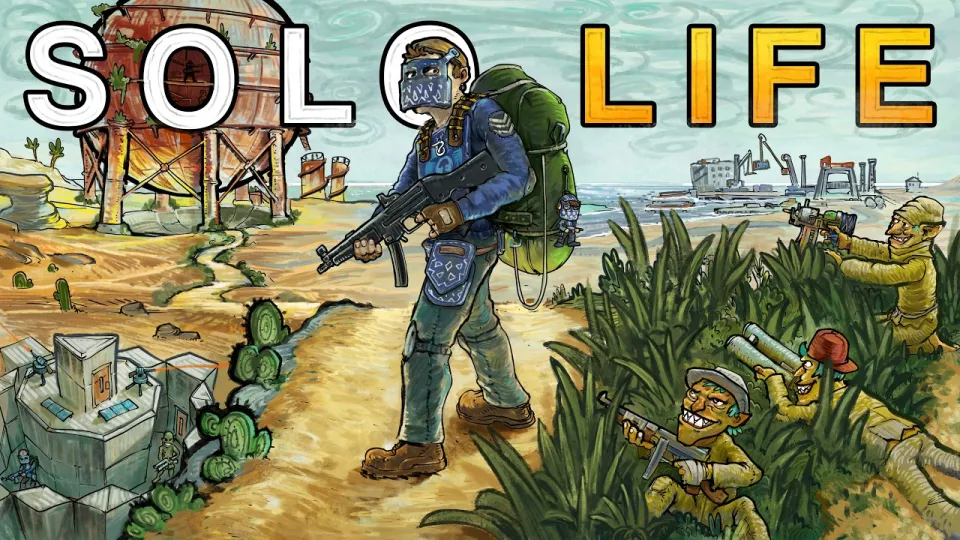
Video: Rust - THE SOLO LIFE V16
Want articles like this for your own video to promote it on YouTube and Google? Order them through the Telegram bot @sat_sit_bot. It writes articles around your video, embeds the video and publishes them on popular niche websites (no ads). Your first 50 articles are free.
Key takeaways
- Blooprint's Solo Life V16 is a fully solo run: one player holds a high-value monument while multiple neighboring groups try to push him out.
- The core challenge is raid defense and online pressure — neighbors attack in numbers, so a solo has to fight, relocate loot and repair instead of turtling.
- Solo raiding works on a strict budget: pick targets by profit, not by grudge, and only commit when the return covers the explosives.
- Friendly neighbors are a real resource — a reliable ally can turn a 1v3 defense into a 2v3 without splitting loot permanently.
- The episode closes the Solo Life series arc and doubles as a practical guide to monument control, parachute drops and cargo/dome rotations.
Rust is a survival game where a solo player can hold a high-value monument alone — but only by treating every fight as a cost calculation, not a grudge match. Blooprint's Solo Life V16 shows exactly that: one player claims a monument, absorbs waves of angry neighbors and defends a base with no teammates to rotate in. If you want the sponsored bonus that supports the channel, grab it through the War Thunder signup link used in the episode.
What Solo Life V16 actually is
Solo Life V16 is a single-player Rust run built around monument control rather than a big clan base. The premise is simple and brutal: claim an overpowered monument, farm it hard, and survive the moment your neighbors realize a lone player is sitting on top of the loot. Everything else — the base, the kits, the raids — is downstream of that decision.
The format matters for anyone searching for solo Rust gameplay. There is no teammate to watch the door, no second pair of hands on the turret, and no one to run loot back to base while you hold an angle. Every advantage has to come from preparation: placed deployables, pre-built fallback boxes, and a stash of kits that lets you re-gear in minutes instead of farming for an hour.
Holding a monument as a solo player
Holding a monument solo means converting a public space into a private farm through positioning, timing and denial. Monuments like the Dome and the cargo ship route are popular precisely because they are contested — the loot is good, which means other players will arrive. A solo cannot win a straight attrition fight, so the goal is to make every engagement expensive for the attacker.
- Scout before you commit. Count how many players are rotating through, what kits they carry, and which sides they approach from. A monument you cannot watch is a monument you cannot hold.
- Build a small forward box near the monument, not on it. A 1x1 or 2x1 with a door, a sleeping bag and a small stash is enough to re-kit after a death without exposing your main base.
- Control the high ground and the exits, not the loot room. Most players die reaching for crates; the solo who owns the stairs and the parachute drop zones owns the monument.
- Reset after every fight. Repair, restock, move loot out. A monument hold collapses when the winner of one fight has no ammo for the next.
Parachute drops and cargo rotations are the reason this works. A solo who knows the drop timing can be in position before a group arrives, take the crate and leave through a route the group does not cover. The Dome is the same logic at a smaller scale: verticality rewards the player who is already above the fight.
Raid defense when the neighbors arrive
The defining scene of Solo Life V16 is a raid defense against multiple angry neighbors — a situation where a solo defends a base while outnumbered. The math is unforgiving: three attackers can rotate rockets, cover each other and split your attention. What saves the defender is that attackers pay for every attempt while the defender only pays for repairs.
- Pre-place turrets and traps on the approach, not inside the loot room. Damage on the way in buys the seconds you need to re-kit.
- Keep a second kit and a second weapon in a separate, cheap box. If the main base falls, you should still be able to fight from outside.
- Use doors and verticality to split attackers. A group that has to cover two entrances is a group that cannot push one together.
- Accept losses early. Losing a front room is cheaper than losing the whole base trying to hold a wall that is already gone.
- Talk. Negotiation and reputation are legitimate Rust tools; a neighbor who hesitates is a neighbor who is not blowing in.
A friendly neighbor changes everything. The episode's most useful takeaway is that a competent ally can turn a losing 1v3 into a winnable 2v3 — without merging bases or splitting loot permanently. Solo does not have to mean hostile to everyone.
How to solo raid without bleeding resources
Solo raiding in Rust is a profit decision, not a revenge decision. Before you craft a single rocket, estimate what the target base is likely to hold and whether the raid pays for itself. On vanilla servers, a small group base with a decent loot room is usually a better target than a big clan compound with layered doors.
- Scout the base for activity: sleeping bags, furnaces running, doors left open. An offline-looking base with fresh activity is often a trap or a returning player.
- Choose the cheapest path in. Soft-side walls, wooden doors and unupgraded ceilings cost far less than armored cores.
- Bring exactly what the raid needs plus one backup kit. Extra explosives sitting in your inventory are loot for the defender's neighbors.
- Move loot in stages. Carry out the valuable stack, deposit it, come back. A single trip with everything is how solos lose raids after winning them.
- Expect a counter-raid. The moment your explosives are heard, someone is already scouting your base.
Online raids are riskier but often more profitable, because an online defender makes mistakes under pressure. The trade-off is time: an online raid can stall, and a stalled solo raid is a counter-raid waiting to happen.
Common questions from solo players
Solo players keep asking the same things, and the episode answers most of them by example. The most common worry is visibility — dark scenes and night fights are genuinely hard to read, and even with night vision the screen can look black. The practical fix is preparation: know the layout before it gets dark, use sound cues, and do not start a fight you cannot see.
The second recurring theme is how creators make Rust look calm when the game is chaos. The answer is editing and pacing, not a different game — a solo run is mostly downtime, farming and planning, with short bursts of violence. The third is the friendly-neighbor question: yes, running a duo with a reliable player is worth it, but only if the alliance is temporary and clearly bounded. The fourth is progression. A solo base that looks like a starter is not a failure — it is a deliberate choice to stay small, cheap and replaceable while the real value sits in stashes and kits.
Useful links
- War Thunder bonus (PC and consoles): https://wtplay.link/blooprint
- War Thunder mobile: https://wtm.game/blooprint
- Twitch: https://www.twitch.tv/blooprint
- Kick: https://kick.com/blooprint
- TikTok: https://www.tiktok.com/@blooprintgames
The solo life verdict
Solo Life V16 works because it treats solo Rust as a discipline rather than a handicap: hold the monument, keep the base cheap, and make attackers pay more than you do. The raid defense against multiple neighbors is the clearest illustration — a solo survives by preparation and positioning, not by outgunning a group. The friendly-neighbor arc adds the missing piece: alliances of convenience are a legitimate solo strategy. Blooprint's channel is the author of this breakdown, and the episode is worth watching for the pacing alone. If you want to support the channel, use the War Thunder registration link from the video.
Source: Rust - THE SOLO LIFE V16 · Markdown version
Questions & answers
Can you really hold a monument as a solo player in Rust?
Yes, but not by fighting everyone head-on. A solo holds a monument through timing, high-ground control and cheap forward boxes that let them re-kit fast. The goal is to make each contest expensive for attackers, then leave with the loot before a group commits.
How do you defend a base alone against multiple raiders?
Pre-place turrets and traps on the approach, keep a spare kit in a separate box, and use doors to split the attackers' attention. Accept that losing a front room is cheaper than losing the base, and consider negotiating with neighbors who hesitate.
Is solo raiding worth it on vanilla servers?
Only when the raid pays for itself. Scout for soft sides and cheap entry points, bring exactly the explosives you need plus one backup kit, and move loot out in stages. Expect a counter-raid as soon as your explosives are heard.
Should a solo player team up with a friendly neighbor?
A temporary alliance with a competent neighbor can turn a losing defense into a winnable fight. Keep it bounded — share the fight, not the base — and treat the partnership as situational rather than permanent.